Spreading Your Risk: Mastering the Simple Strategy Behind Long-Term Financial Stability
Spreading Your Risk: Mastering the Simple Strategy Behind Long-Term Financial Stability
When beginner investors enter the stock market, their entire focus is usually on finding the next booming stock or high-growth fund. However, market history consistently demonstrates that individual stock selection contributes only a small fraction to your long-term success. The true driver of your overall returns and your peace of mind during market crashes is your Asset Allocation strategy.
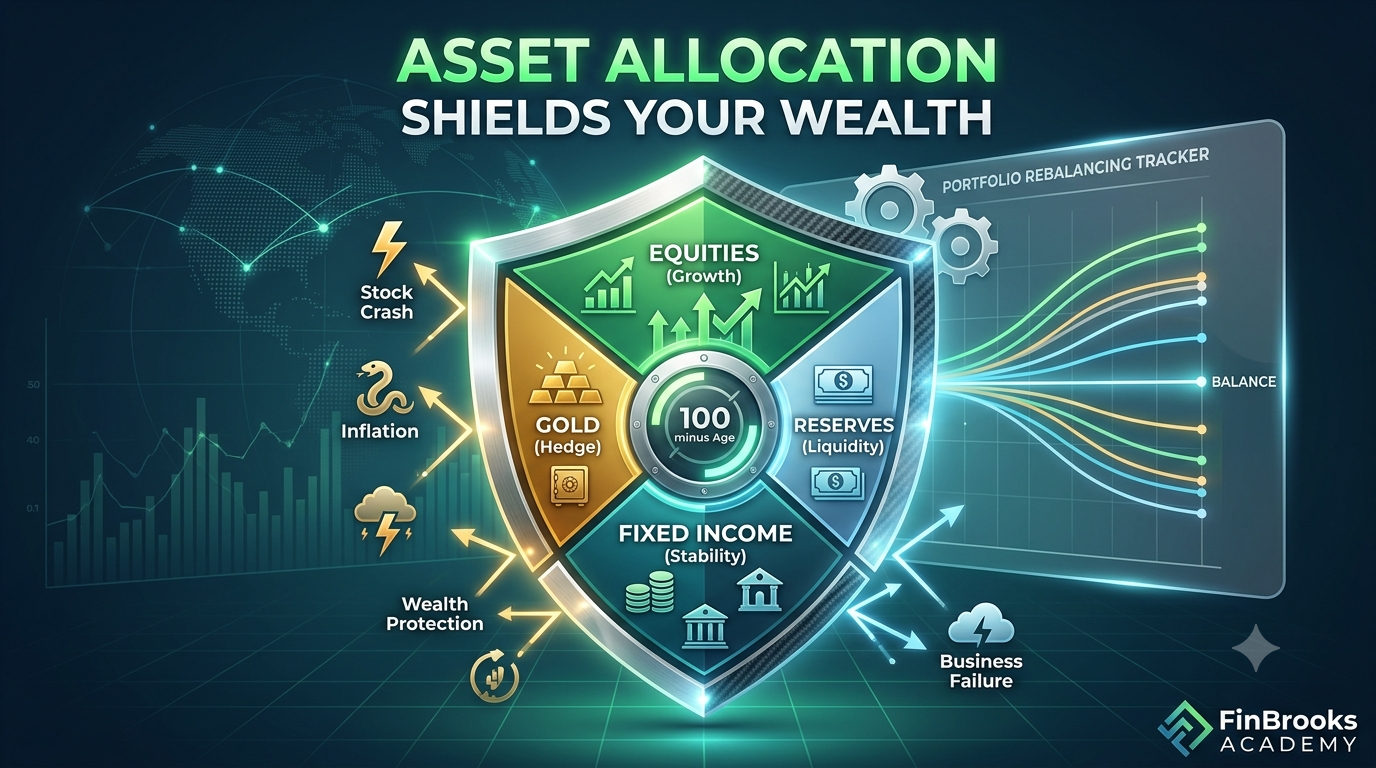
Asset allocation is the practice of dividing your investment portfolio among different asset categories, such as equities, debt, real estate, and gold. Let us examine why putting all your eggs in one basket is a dangerous game and how balancing your assets creates a bulletproof portfolio.
The Problem With One-Track Investing
Every asset class goes through cycles. Equities offer exceptional high returns over time, but they can experience severe volatility during market downturns. Bonds and fixed income instruments provide stability and regular income, but they rarely generate high wealth. Gold acts as a safe haven during economic crisis, while real estate provides physical security and cash flow.
If your portfolio is 100% invested in equities during a market crash, your portfolio value can plummet overnight, driving you to panic and sell at a loss. Conversely, if you keep all your money in safe fixed deposits, inflation will quietly erode your purchasing power. A well-allocated portfolio balances growth and protection so you never suffer catastrophic losses.
Finding Your Ideal Asset Mix
There is no single “correct” asset allocation for everyone. Your ideal split depends heavily on three key factors: your age, your financial goals, and your personal risk tolerance.
A traditional thumb rule used by investors is the “100 minus Age” rule. If you are 30 years old, you subtract 30 from 100 to get 70%. This suggests allocating 70% of your portfolio to growth assets like equities, and keeping the remaining 30% in stability assets like debt or gold. As you age, your exposure to equity gradually decreases to preserve the capital you have built.
What is Portfolio Rebalancing?
Setting up your asset allocation is only the first step. Over time, as different markets move up and down, your original asset balance will naturally drift out of proportion.
For example, if the stock market experiences a massive bull run, your initial 70% equity allocation might jump to 85% of your total wealth. This leaves you heavily exposed to market risk. Rebalancing means systematically selling a portion of your outperforming assets (locking in profits) and buying underperforming assets (buying low) to bring your portfolio back to its original target ratio.
Asset Class Roles in a Portfolio
| Asset Class | Portfolio Role | Risk Profile | Primary Objective |
| Equities (Stocks/Funds) | Growth Engine | High | High long-term capital appreciation |
| Fixed Income (Debt/FDs) | Stability Anchor | Low | Capital preservation and regular income |
| Gold & Precious Metals | Crisis Shield | Moderate | Hedge against inflation and geopolitical risk |
| Cash Reserves | Emergency Safety | Zero | Instant liquidity for unexpected needs |
FinBrooks Reality Check
Investing is not about making maximum returns in a single lucky year; it is about staying in the game for decades without getting wiped out during market panics.
Check your portfolio mix once every year. If market movements have shifted your balance significantly, execute a disciplined rebalance. Treating portfolio management as a routine maintenance task keeps your financial goals on track without requiring constant stress or daily market watching.
Stay Ahead of the Market 📈
Subscribe to our weekly newsletter
Get your weekly market summary from FinBrooks Insights and smart financial lessons from FinBrooks Academy delivered straight to your inbox every weekend!