Synopsis: Understand advance tax in India, including who must pay, FY 2026–27 instalment deadlines, how to calculate your liability, online payment steps and interest on delayed payments.
What Is Advance Tax in India? A Complete Guide for Taxpayers
Paying income tax does not always mean waiting until the end of the financial year. Under India’s advance tax system, eligible taxpayers are required to pay their estimated income tax in instalments during the year itself. This system is commonly known as Advance Tax or the “pay-as-you-earn” tax system.
Advance tax is particularly relevant for freelancers, business owners, professionals, consultants, investors earning taxable income and individuals whose salary or other income does not have sufficient tax deducted at source (TDS).
Understanding advance tax can help you avoid interest charges, manage your cash flow and stay compliant with income tax rules.
What Is Advance Tax?
Advance tax is the income tax paid to the government during the financial year on the basis of your estimated total taxable income.
Instead of paying the entire tax after the financial year ends, you calculate your expected tax liability and pay it in prescribed instalments.
For example, if your estimated net income tax liability for the year is ₹60,000 after adjusting eligible TDS and TCS, you may need to pay this amount in advance tax instalments during the financial year.
Advance tax is not an additional tax. It is simply an advance payment of your regular income tax liability.
Who Is Required to Pay Advance Tax?
A taxpayer is generally required to pay advance tax when the estimated net tax payable for the financial year is ₹10,000 or more.
This can apply to:
- Salaried individuals with additional taxable income.
- Freelancers and consultants.
- Business owners and self-employed professionals.
- Individuals earning taxable interest or rental income.
- Investors earning taxable capital gains or other income.
- Companies, firms and other eligible taxpayers.
Who Is Exempt from Advance Tax?
A resident senior citizen who is 60 years of age or older during the relevant financial year and does not have income from business or profession is generally not required to pay advance tax.
However, other taxpayers should check their estimated tax liability after adjusting eligible TDS and TCS before deciding whether advance tax applies.
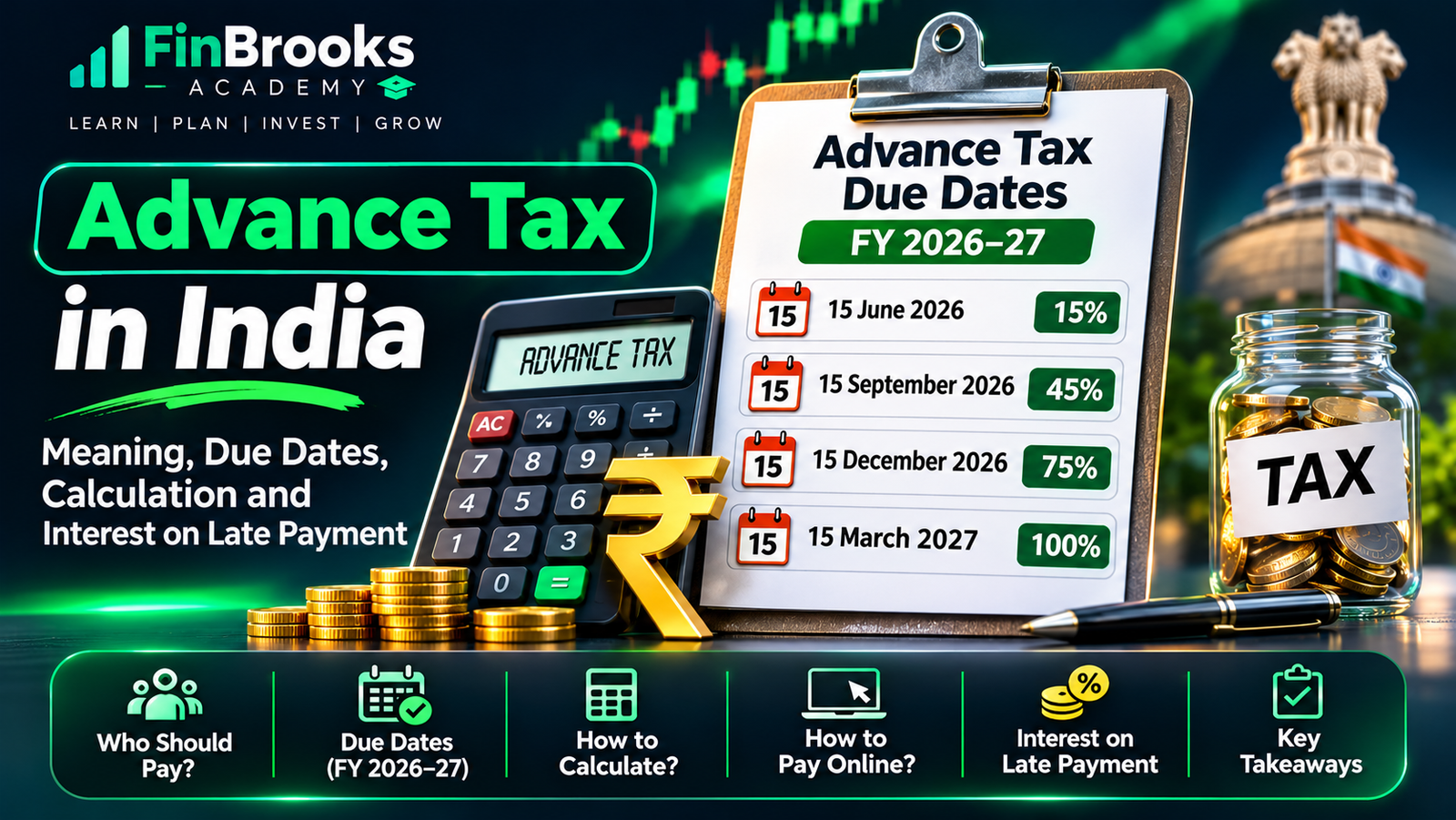
Advance Tax Due Dates for FY 2026–27
For the financial year 2026–27, taxpayers who are not covered by the eligible presumptive taxation provisions generally have to pay advance tax in four instalments.
| Instalment | Due Date | Cumulative Tax Payment |
|---|---|---|
| First | 15 June 2026 | 15% |
| Second | 15 September 2026 | 45% |
| Third | 15 December 2026 | 75% |
| Fourth | 15 March 2027 | 100% |
The percentages are cumulative. This means that by 15 September, the total advance tax paid should reach at least 45% of the estimated annual advance tax liability, after accounting for earlier instalments.
Advance Tax for Eligible Presumptive Taxpayers
Eligible taxpayers who declare income under the applicable presumptive taxation provisions can generally pay their entire advance tax liability in one instalment on or before 15 March 2027.
Always confirm whether your particular presumptive taxation scheme qualifies for this payment schedule.
How to Calculate Advance Tax?
Calculating advance tax involves estimating your total taxable income for the financial year and determining the tax payable on it.
Follow these steps:
Step 1: Estimate Your Total Income
Add your expected income from all applicable sources, such as:
- Salary
- Business or professional income
- Interest from savings accounts and deposits
- Rental income
- Capital gains
- Other taxable income
Step 2: Calculate Your Estimated Income Tax
Calculate the income tax on your estimated taxable income using the applicable tax regime, deductions, exemptions and tax rules.
Step 3: Deduct TDS and TCS
Reduce the eligible TDS and TCS expected to be credited against your tax liability.
Step 4: Determine Your Net Advance Tax Liability
The remaining amount is your estimated net tax payable for the year. If this amount is ₹10,000 or more, advance tax provisions generally apply.
Advance Tax Calculation Example
Suppose an individual estimates the following tax position for FY 2026–27:
| Particulars | Amount |
|---|---|
| Estimated income tax liability | ₹1,00,000 |
| Expected TDS | ₹25,000 |
| Net advance tax liability | ₹75,000 |
The estimated advance tax liability is ₹75,000.
The instalment-wise cumulative payment requirement would be:
| Due Date | Cumulative Percentage | Cumulative Amount |
|---|---|---|
| 15 June 2026 | 15% | ₹11,250 |
| 15 September 2026 | 45% | ₹33,750 |
| 15 December 2026 | 75% | ₹56,250 |
| 15 March 2027 | 100% | ₹75,000 |
These are cumulative targets, not four separate payments of the listed amounts. Any advance tax already paid is adjusted against the next instalment.
How to Pay Advance Tax Online in India?
Taxpayers can pay advance tax through the Income Tax Department’s e-Filing portal.
Follow these steps:
- Visit the official Income Tax e-Filing portal.
- Select the e-Pay Tax option.
- Enter your PAN and confirm the required details.
- Select the appropriate tax year and payment category.
- Choose the Advance Tax option.
- Enter the amount payable and select a suitable payment method.
- Complete the payment through the available banking facility.
- Download and save the payment receipt or challan for your records.
For income earned during FY 2026–27, select the applicable Tax Year 2026–27 payment details under the Income-tax Act, 2025 framework.
Always verify the tax year and payment category before completing the transaction.
What Happens If You Do Not Pay Advance Tax on Time?
Failure to pay the required advance tax or paying less than the prescribed amount can result in interest liability.
For tax year 2026–27, the Income-tax Act, 2025 contains provisions corresponding to the earlier interest provisions under Sections 234B and 234C of the Income-tax Act, 1961.
Interest for Shortfall or Non-Payment
Interest may apply when the advance tax paid is insufficient or when the required amount is not paid by the prescribed due dates.
The applicable provisions generally provide for interest at 1% per month or part of a month for the specified period, subject to the relevant calculation rules.
Interest for Deferment of Instalments
If you fail to pay the required advance tax instalment on time, interest may also apply for deferment.
This means that even if you eventually pay the full tax before the end of the financial year, a delay in earlier instalments may still create an interest liability.
The exact interest calculation depends on the amount paid, the due dates and the applicable statutory conditions.
What If Your Income Increases During the Financial Year?
Advance tax is based on estimated income, so your calculation may change during the year.
For example, you may receive an unexpected bonus, earn additional freelance income, make taxable capital gains or receive higher business profits.
In such cases, revise your estimated annual tax liability and adjust the remaining advance tax instalments accordingly.
You do not have to keep following an outdated estimate if your actual income changes.
Advance Tax vs Self-Assessment Tax
Advance tax and self-assessment tax are both payments of income tax, but they are paid at different stages.
| Basis | Advance Tax | Self-Assessment Tax |
|---|---|---|
| Payment timing | During the financial year | After the financial year ends, before filing the return |
| Calculation | Based on estimated annual income | Based on actual income and final tax computation |
| Purpose | Pay tax in advance | Clear remaining tax liability |
| Instalments | Generally paid in prescribed instalments | Usually paid as a balance amount |
Understanding this difference helps taxpayers plan their tax payments correctly.
Important Things Every Taxpayer Should Remember
- Advance tax generally applies when net tax payable is ₹10,000 or more.
- Eligible TDS and TCS should be considered while calculating the liability.
- Regular taxpayers generally follow four instalment dates.
- Eligible presumptive taxpayers may have a different payment schedule.
- Additional income during the year can increase your advance tax liability.
- Delayed or insufficient payments may attract interest.
- Keep payment challans and tax records safely for future reference.
Conclusion
Advance tax is an important part of income tax compliance in India. It helps taxpayers distribute their tax payments throughout the financial year instead of facing a large payment at the end.
Whether you are a freelancer, business owner, salaried employee with additional income or an investor, estimating your tax liability in advance can help you avoid unnecessary interest and manage your finances more effectively.
Make it a habit to review your income, TDS and advance tax position before every instalment deadline. A little planning can help you stay financially organised and tax-compliant.
Disclaimer: This article is for educational purposes only and should not be treated as personalised tax advice. Taxpayers should verify their individual tax liability and applicable provisions before making payments.
Stay Ahead of the Market 📈
Subscribe to our weekly newsletter
Get your weekly market summary from FinBrooks Insights and smart financial lessons from FinBrooks Academy delivered straight to your inbox every weekend!