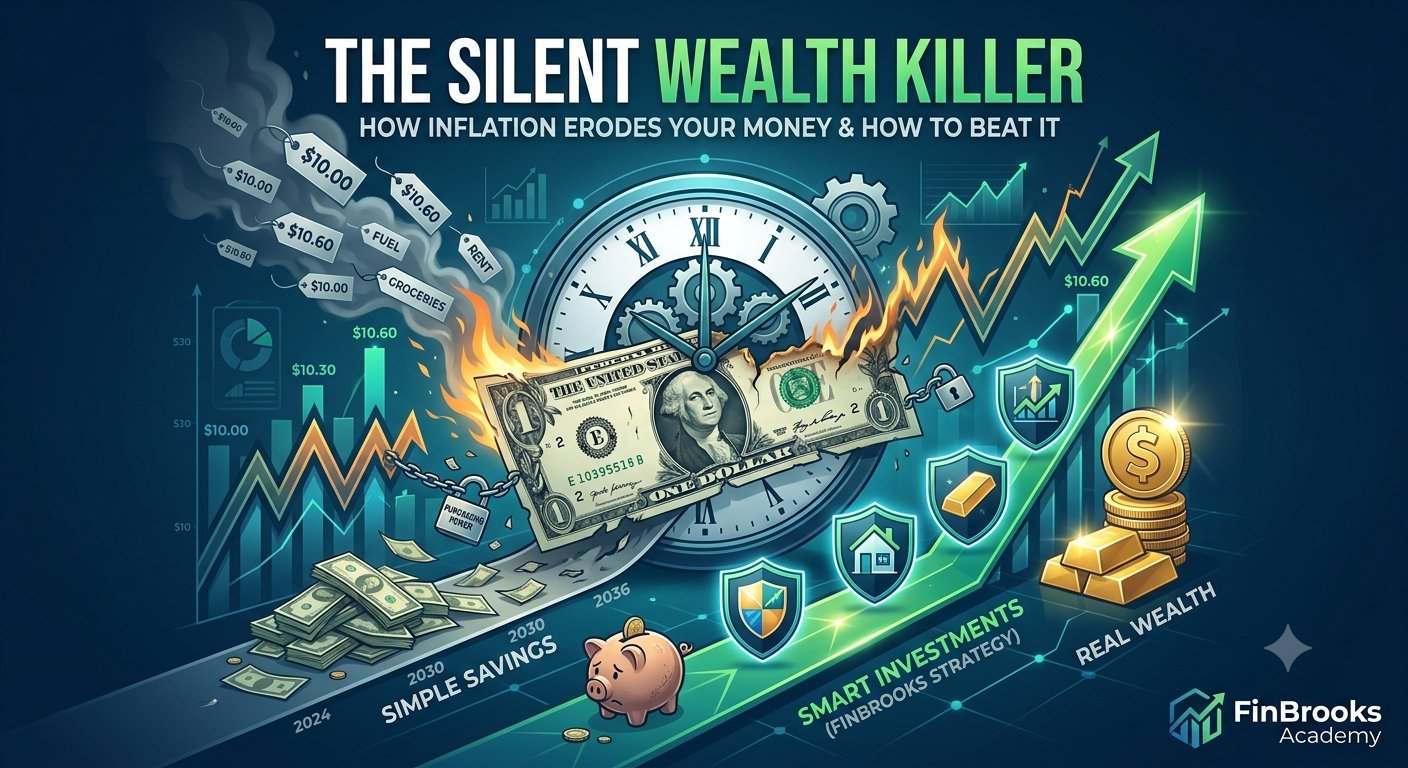
Understanding the Invisible Tax: Why Simply Saving Cash Is Making You Poorer
Most people believe that keeping money safe in a bank account or cash vault guarantees financial security. If you have $10,000 today and it stays untouched for ten years, you will still have $10,000 in nominal value. However, in reality, that same money will buy significantly fewer goods and services in the future than it does today.
This gradual loss of purchasing power is caused by inflation, the silent wealth killer that erodes the real value of cash every single day. Let us break down how inflation works behind the scenes and what strategies you can use to protect your hard-earned capital.
What Is Inflation and How Does It Work?
Inflation is the rate at which the general level of prices for goods and services rises over time. As prices increase, every single unit of currency buys a smaller percentage of a good or service.
Think of inflation as an invisible drag on your savings. If the annual inflation rate is 6%, an item that costs $100 today will cost $106 next year. If your savings account is only earning 3% interest during that same period, your money is effectively losing 3% of its real purchasing power every year.
The Myth of “Safe” Cash
When investors think of risk, they usually picture stock market crashes or business failures. However, holding pure cash or ultra-low yield savings instruments carries a guaranteed loss of purchasing power over time.
While cash is essential for short term liquidity and emergency reserves, holding excess cash for long-term goals guarantees that inflation will eat away at your wealth. To preserve and grow your capital over decades, your money must work hard enough to generate returns that outpace the rate of inflation after accounting for taxes.
Asset Classes vs. Inflation
Different financial assets respond to inflation in very different ways. Understanding where to park your money is key to staying ahead of rising costs.
| Asset Class | Inflation Protection Level | Primary Mechanism |
| Cash & Basic Savings | Extremely Poor | Earns far below inflation rates; loses real value continuously |
| Fixed Income (Bonds/FDs) | Moderate to Low | May match inflation, but after-tax returns often fall behind |
| Real Estate | Good | Property values and rental income generally adjust upward with inflation |
| Equities (Stocks/Index Funds) | High | Companies can increase product prices, growing earnings over the long term |
FinBrooks Reality Check
To build genuine wealth, your primary goal shouldn’t just be to make returns, it must be to earn Real Returns (Total Return minus Inflation minus Taxes).
If your investment earns 8% nominal return, but inflation is 5% and taxes take 1%, your real return is only 2%. Focus on building a well-diversified portfolio that includes inflation-beating assets like equities and real estate so your future purchasing power stays fully protected.
Stay Ahead of the Market 📈
Subscribe to our weekly newsletter
Get your weekly market summary from FinBrooks Insights and smart financial lessons from FinBrooks Academy delivered straight to your inbox every weekend!