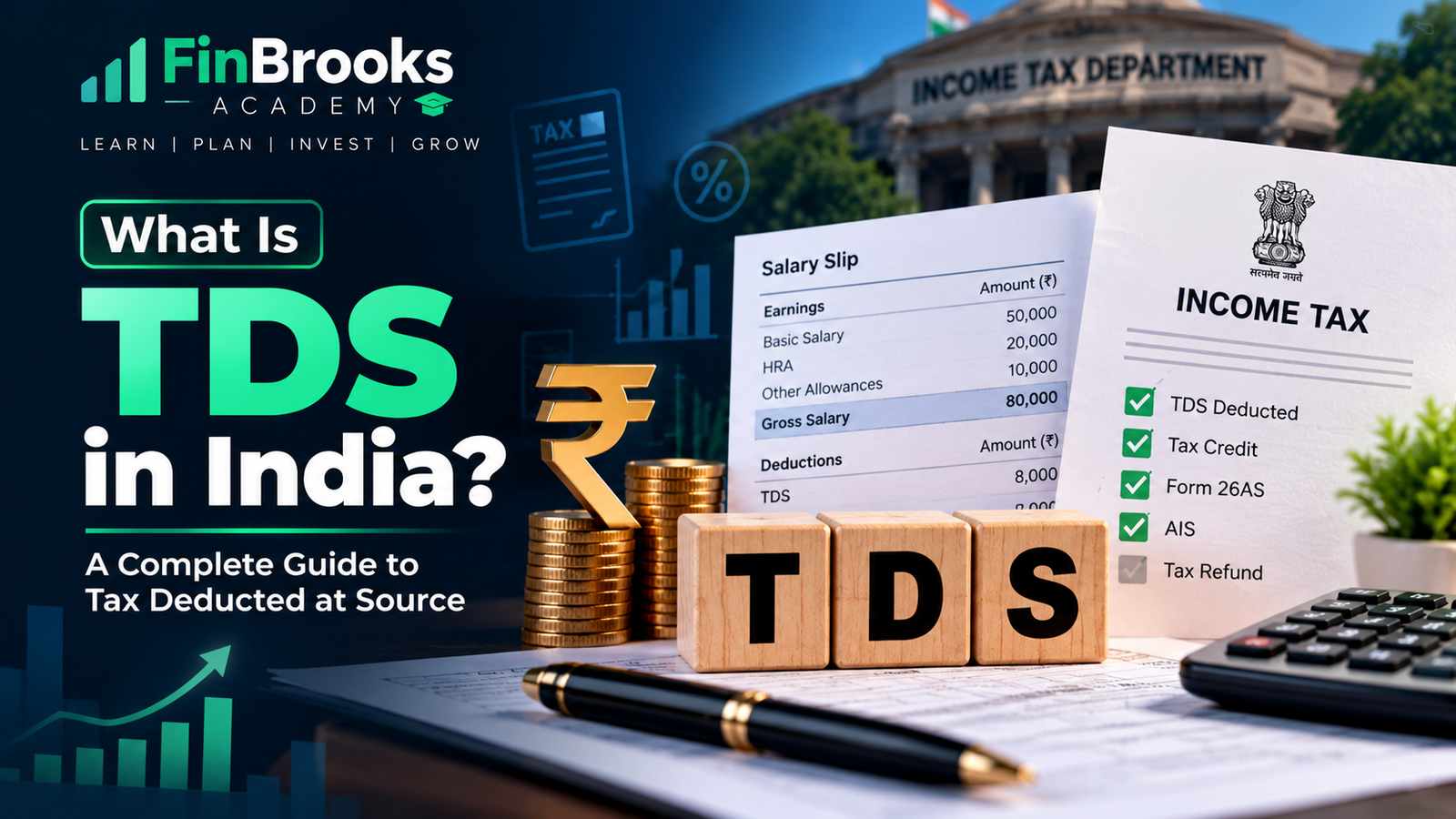
Synopsis : Learn how Tax Deducted at Source (TDS) works in India, when tax may be deducted, how to check Form 26AS and AIS, and when you may be eligible for a tax refund.
Understanding Tax Deducted at Source
When you receive a salary, interest on a bank deposit, rent income or certain professional payments, you may notice that the amount credited to your account is lower than the total amount payable to you. One possible reason is Tax Deducted at Source, commonly known as TDS.
TDS is a mechanism through which tax is collected at the time certain payments are made or credited. It helps distribute tax collection throughout the financial year rather than collecting the entire amount only after the year ends.
Understanding TDS can help taxpayers review their income, track tax deductions and claim eligible credit while filing their income tax returns.
What Is TDS?
Tax Deducted at Source is a system under which a person or organisation making certain specified payments deducts tax at the applicable rate and deposits it with the government.
The person making the payment is generally called the deductor, while the person receiving the payment is called the deductee.
For example, an employer may deduct TDS from an employee’s taxable salary and deposit that amount with the government. The employee can then check the tax credit reflected in their tax records.
TDS is not a separate additional tax simply because money has been deducted. It is generally a way of collecting tax in advance against the recipient’s tax liability, subject to the applicable rules.
How Does TDS Work?
The process usually involves four steps.
1. A Payment Becomes Subject to TDS
A payment falls within a category for which tax deduction is required under the applicable provisions. Examples may include salary, certain interest payments, rent, commission or professional fees.
2. The Deductor Calculates the Applicable Amount
The deductor determines whether TDS applies and calculates the amount based on the relevant provision, payment amount, applicable rate and other conditions.
3. Tax Is Deducted and Deposited
The deductor deducts the required amount and deposits it with the government within the applicable deadline.
4. The Recipient Checks the Tax Credit
The recipient can review the available tax deduction information in their tax records and check whether the deduction has been correctly reported.
Common Types of Payments on Which TDS May Apply
TDS provisions differ according to the nature of the payment. Some common examples include:
TDS on Salary
Employers may deduct TDS from salary based on the estimated taxable salary and applicable income tax rules. The calculation can depend on the employee’s income, eligible deductions and tax regime.
TDS on Bank Interest
Certain interest payments from banks and other specified institutions may attract TDS when the relevant legal conditions and thresholds are met.
A deduction of TDS does not necessarily mean that the recipient’s final tax liability is equal to the amount deducted.
TDS on Rent
Certain rent payments may require TDS depending on the applicable provision, payment amount and the status of the payer and recipient.
Different rules can apply to different types of rent arrangements, so the relevant provision should be checked before calculating a deduction.
TDS on Professional Fees
Payments for specified professional or technical services may attract TDS where the relevant legal conditions are satisfied.
The applicable rate and threshold depend on the nature of the payment and the provision governing it.
What Is the Difference Between TDS and Final Income Tax?
TDS and final income tax liability are related, but they are not the same thing.
TDS is tax deducted during the year on specified payments. Final income tax liability is calculated after considering the taxpayer’s total taxable income, applicable tax regime, eligible deductions, rebates, tax credits and other relevant provisions.
For example, suppose a taxpayer has ₹8,000 deducted as TDS during the year. After calculating the final tax liability, the taxpayer may discover that the total liability is higher or lower than the tax already deducted.
If the eligible tax credits exceed the final liability, a refund may be available after the return is processed. If the final liability exceeds the available credits, additional tax may be payable.
These outcomes depend on the individual’s complete tax position and the applicable rules.
What Is Form 16?
Form 16 is a certificate generally issued by an employer to an employee when tax has been deducted from salary, subject to the applicable requirements.
It provides information about salary income and tax deducted by the employer for the relevant period. It can help employees prepare and verify their income tax returns.
Employees should compare the details in Form 16 with their salary records and available tax credit information.
What Are Form 26AS and AIS?
Form 26AS and the Annual Information Statement, or AIS, help taxpayers review information relevant to their tax affairs.
Form 26AS
Form 26AS provides tax-related information, including tax deducted or collected and other details available under the applicable reporting framework.
Taxpayers can use it to check whether reported tax credits correspond with the deductions they expect to receive.
Annual Information Statement
AIS provides a broader view of specified financial information reported to the tax department. Depending on the information available, it may include details relating to income, financial transactions and tax-related entries.
Taxpayers should review relevant entries and address discrepancies through the appropriate reporting or correction process.
How Can You Check Your TDS Credit?
Taxpayers can follow these steps to review their TDS information.
- Access the official income tax e-filing portal.
- Sign in using the appropriate credentials.
- Open the relevant tax information section and access Form 26AS or AIS as available.
- Compare the entries with Form 16, bank statements, payment records or other relevant documents.
- If a discrepancy appears, contact the deductor or follow the applicable correction process.
The exact screens and available options may change as the portal is updated.
What Happens If TDS Is Deducted but Not Reflected in Your Records?
A deduction may not immediately appear in the recipient’s tax records. Reporting delays, incorrect identification details or errors in the deductor’s statement can contribute to discrepancies.
If you cannot find an expected credit, consider these steps:
Contact the Deductor
Ask the employer, bank or other payer to confirm the deduction and reporting details.
Verify Your Personal Details
Check whether your PAN and other relevant details were correctly recorded.
Review the Reported Information
Compare the available tax records with the documents supplied by the deductor.
Request a Correction Where Necessary
If an error is confirmed, the deductor may need to file a correction statement under the applicable procedure. Keep relevant supporting documents for your records.
Do not assume that a deduction has been successfully credited merely because the amount was reduced from your payment.
Can You Claim a Refund of TDS?
A refund may be available when the eligible tax deducted or paid exceeds the taxpayer’s final tax liability.
For example, a taxpayer may have TDS deducted on certain income even though the total tax payable after applying the relevant provisions is lower than the amount deducted.
To seek an eligible refund, the taxpayer generally needs to file an accurate income tax return where required and ensure that the tax credit and bank details are correct.
A refund is not automatic in every case. It depends on the taxpayer’s circumstances, the applicable filing requirements and processing of the return.
How Can You Reduce Unnecessary TDS Deductions?
Taxpayers should not focus only on reducing TDS. The important goal is to ensure that deductions are made correctly under the law.
Depending on the applicable provision and individual circumstances, taxpayers may be able to submit the required declarations or certificates where permitted. For example, certain eligible taxpayers may be able to use Form 15G or Form 15H for specified income where the legal conditions are met.
These forms are not suitable for everyone and should not be submitted merely to avoid tax. Check the eligibility conditions carefully before using them.
Keep your PAN details updated, provide accurate declarations and review your tax records regularly.
Common Mistakes to Avoid
Taxpayers should be careful not to make the following mistakes:
- Assuming that TDS deducted is always equal to the final tax liability.
- Ignoring differences between Form 16, Form 26AS and AIS.
- Forgetting to verify tax credits before filing an income tax return.
- Assuming that every payment is subject to the same TDS rate.
- Submitting declarations without checking eligibility.
- Ignoring a missing tax credit until after the filing process is complete.
Careful record-keeping can make tax filing easier and help reduce avoidable errors.
Conclusion
Tax Deducted at Source is an important part of India’s tax collection system. It allows tax to be collected when certain payments are made or credited and helps taxpayers track tax paid during the financial year.
Understanding the difference between TDS and final tax liability, reviewing Form 16 and checking Form 26AS and AIS can help taxpayers manage their tax records more effectively.
The most important practice is to verify your tax credits, keep supporting documents and file accurate tax returns according to the rules applicable to your situation.
Disclaimer: This article is for educational purposes only. TDS provisions, thresholds and rates depend on the applicable law and individual circumstances. Verify the current rules before making tax-related decisions.
Stay Ahead of the Market 📈
Subscribe to our weekly newsletter
Get your weekly market summary from FinBrooks Insights and smart financial lessons from FinBrooks Academy delivered straight to your inbox every weekend!