Beyond Banking Accounts: Why Your Financial Reputation Dictates Your Purchasing Power
When you walk into a bank to borrow money for a new car, a dream home, or a business expansion, the loan officer doesn’t just look at your fancy clothes or your monthly salary slip. Long before they even check your current account balance, they look at a single, three-digit number that summarizes your entire financial history. This number is your credit score.
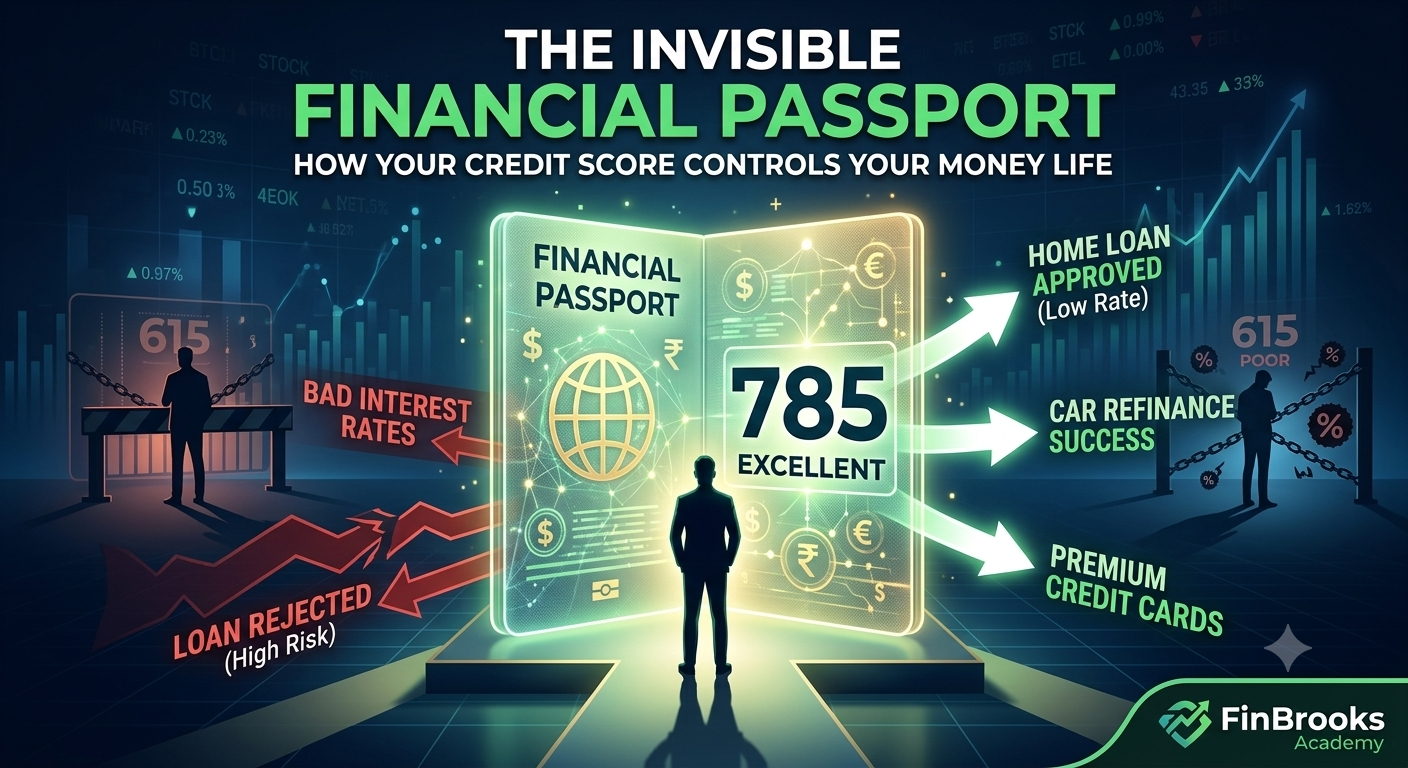
Think of your credit score as your financial passport. Just like a real passport allows you to cross international borders, a solid credit score opens the doors to cheap capital and premium financial products. If this number is low, your financial life can hit a painful standstill, even if you have a decent income today. Let us break down how this invisible system works and how to master it.
What Actually is a Credit Score?
A credit score is a numerical expression ranging from 300 to 900, calculated by credit bureaus based on your past borrowing and repayment behavior. It is essentially a mathematical answer to a simple question that every lender asks: “If I give this person a loan, what is the probability that they will pay me back on time?”
Any score above 750 is generally considered excellent. When you maintain a score in this golden range, banks view you as a low-risk borrower. This means they will practically fight for your business, offering you lower interest rates, faster loan approvals, and waivers on processing fees. A low score, conversely, brands you as high-risk, leading to instant rejections or punishingly high interest rates.
The Hidden Cost of a Bad Score
Many people believe that if they don’t plan to take a big loan right now, their credit score doesn’t matter. This is a massive misconception. A poor financial reputation carries heavy, hidden costs that drain your wealth quietly over time.
For instance, consider two individuals buying the exact same home with a $100,000 loan. Person A has a stellar credit score of 800 and secures an interest rate of 7%. Person B has a careless score of 620 and is forced to accept a rate of 9% because of the perceived risk. Over a 25-year tenure, Person B will end up paying tens of thousands of dollars more in pure interest for the exact same asset. A bad score is essentially a luxury tax on poor financial habits.
Three Mistakes That Destroy Your Score
Building a great score doesn’t require complex strategies; it simply requires avoiding a few silent traps. The first and most common killer is late payments. Even missing a single credit card due date or a loan EMI by a few days is reported instantly to the bureaus, causing your score to plunge.
The second trap is high credit utilization. If your credit card has a limit of $2,000 and you routinely spend $1,900 every month, you look desperate for credit to the algorithms, which lowers your score. Aim to keep your spending below 30% of your total limit. Finally, applying for multiple new credit cards or loans within a short window triggers multiple “hard inquiries,” making you look financially unstable.
The Credit Score Maintenance Tracker
| Score Range | Risk Classification | Impact on Loans & Credit Cards |
| 750 to 900 | Excellent / Elite | Instant approvals, lowest interest rates, highest limits |
| 700 to 749 | Good / Stable | Easy approvals, standard market interest rates |
| 600 to 699 | Fair / Moderate | Strict scrutiny, higher interest rates, lower approval odds |
| 300 to 599 | Poor / High Risk | Frequent rejections, heavy penalties, high security deposits |
FinBrooks Reality Check
You cannot build a great financial reputation overnight. It takes months of consistent, boring, disciplined behavior. If you currently have no credit history because you have always avoided credit cards, you are actually invisible to the banking system, which is also a disadvantage when you need a major loan.
Start small. Get a basic, low-limit credit card, use it only for small monthly bills like your fuel or streaming subscriptions, and set up an automatic payment to clear the balance in full every single month. Treat your credit score like your reputation, hard to build, easy to lose, and incredibly expensive to fix once broken.
Stay Ahead of the Market 📈
Subscribe to our weekly newsletter
Get your weekly market summary from FinBrooks Insights and smart financial lessons from FinBrooks Academy delivered straight to your inbox every weekend!