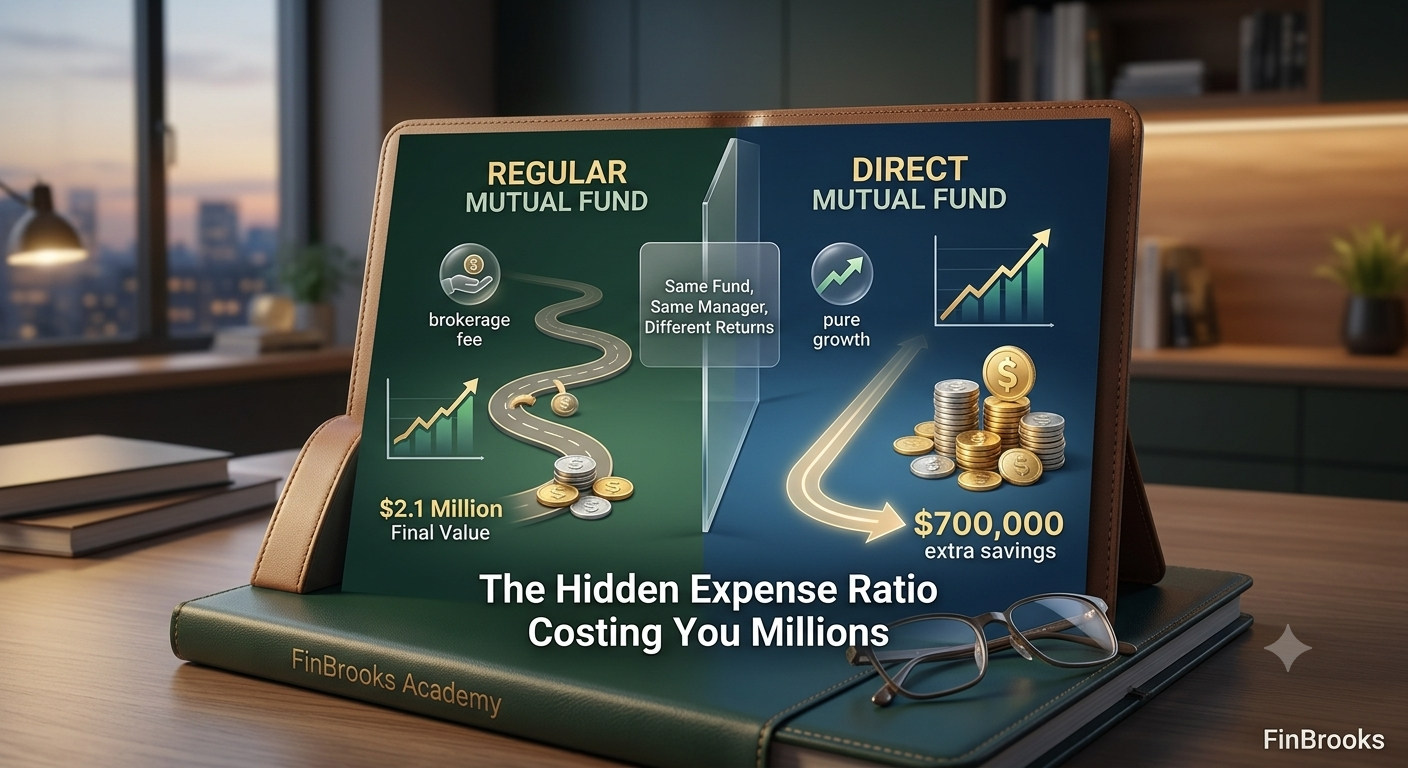
Unmasking Investment Commissions: How a Simple Choice Maximizes Your Wealth
When you decide to invest your hard-earned money in mutual funds, you carefully analyze past returns, fund manager track records, and market conditions. However, millions of smart investors completely overlook a single word in the fund’s name that quietly dictates how much profit actually reaches their bank account. That word is whether the fund is a “Regular” plan or a “Direct” plan.
Both plans invest in the exact same stocks, managed by the exact same fund manager, with zero difference in risk. Yet, over a long-term horizon, choosing the Direct route can leave you with lakhs or even tens of thousands of dollars more in overall wealth. Let us pull back the curtain on how these two plans work and why this hidden cost matters so much.
Understanding the Middleman Mechanics
A Regular Mutual Fund is sold through an intermediary, such as a traditional bank, a financial advisor, or a commission-based broker. To compensate these middlemen for selling you the fund, the Asset Management Company (AMC) pays them an annual ongoing commission out of your invested money.
A Direct Mutual Fund, on the other hand, is purchased directly from the mutual fund company or through non-commission investment apps. Because there is no broker or agent involved in the transaction, the fund house does not need to pay any distributor commission. That saved money stays right inside your portfolio, working for you every single day.
The Power of the Expense Ratio Difference
The cost of managing a mutual fund is reflected in its “Expense Ratio”, a small percentage deducted annually from your total investment value. Regular plans always carry a higher expense ratio than Direct plans to cover distributor commissions, typically differing by 0.5% to 1.5% every year.
At first glance, a 1% difference might sound like a tiny amount that isn’t worth worrying about. But thanks to the power of compounding over 15 to 20 years, that 1% difference compounds into a massive sum. You aren’t just losing that 1% every year; you are also losing all the future returns that 1% would have generated if it had stayed invested in your account.
The Return Disparity Over Time
| Plan Type | Middleman Involved? | Annual Expense Ratio | Long-Term Wealth Impact |
| Regular Mutual Fund | Yes (Brokers, Agents, Banks) | Higher (Includes distributor commission) | Lower final portfolio value due to drag |
| Direct Mutual Fund | No (Directly with fund or app) | Lower (Pure management fee only) | Significantly higher overall wealth |
FinBrooks Reality Check
If you are a self-directed investor who likes doing basic research online, there is almost no reason to buy Regular mutual funds today. Always look for the word “Direct – Growth” when selecting a scheme on your investment app.
However, if you are someone who truly relies on a dedicated human advisor for custom tax planning and personalized hand-holding during market crashes, paying for a Regular plan might be worth the guidance. Just ensure you know exactly how much you are paying for that advice every single year.
Stay Ahead of the Market 📈
Subscribe to our weekly newsletter
Get your weekly market summary from FinBrooks Insights and smart financial lessons from FinBrooks Academy delivered straight to your inbox every weekend!